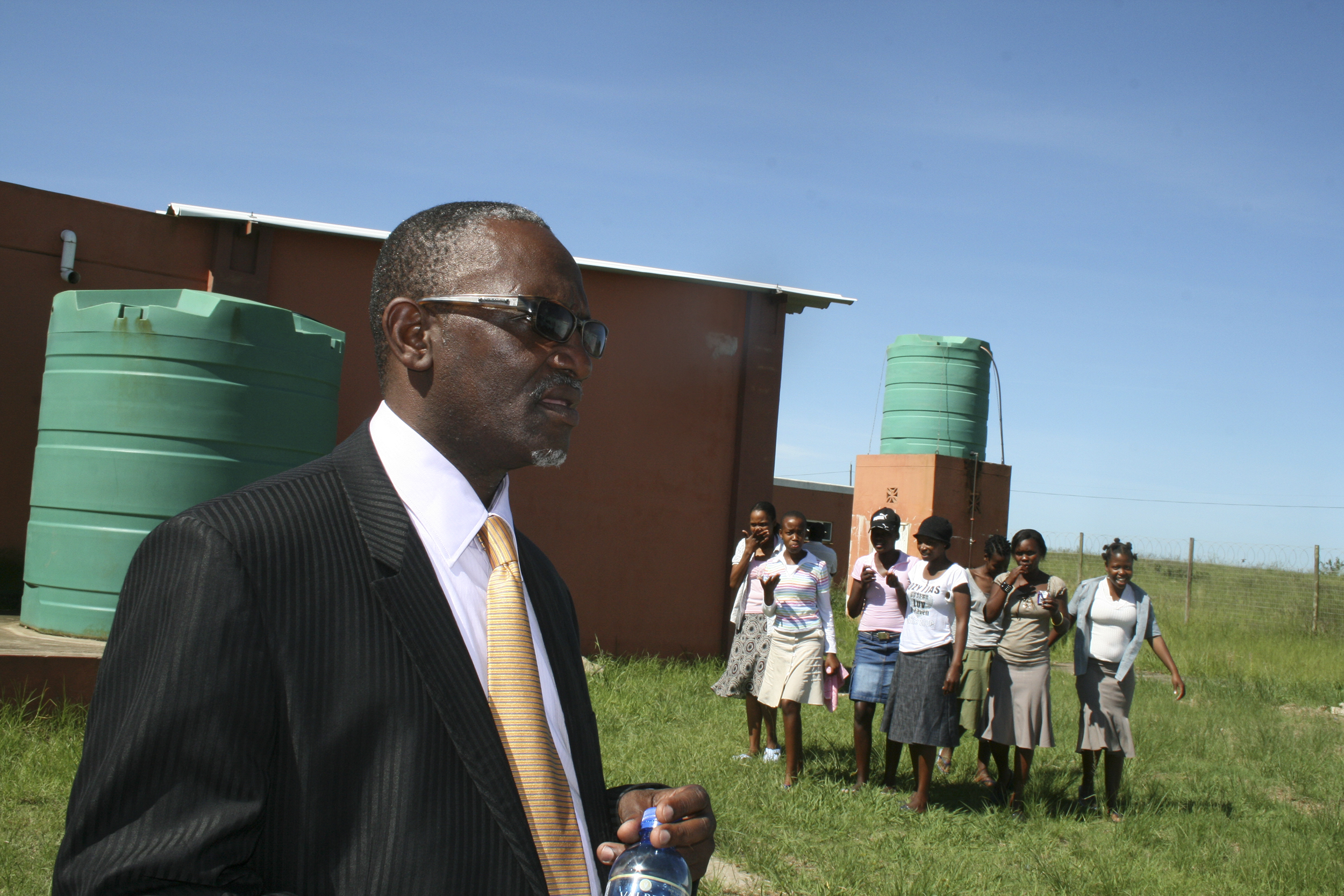
If you drive up the North Coast of KwaZulu Natal, you’ll see what was once little than a series of small seaside towns gradually morphing into something that increasingly looks like Jo’burg. Currently the twin epicentres of this urban spread are Umhlanga and Ballito, but the virus is spreading around the province. It has already filled the once semi-rural suburbs of Hillcrest and Waterfall with strip malls and gated communities and threatens to take up wherever there is a beautiful view waiting to be destroyed.
As pre-planned reality displaces the very notion of the organically evolved village and town, these new locations of middle class human habitation – be they Tuscan, Balinese or grossed-out modernism – have become the literal embodiment of the so-called “end of history”. It all fits perfectly. And inside the gated, monitored and regulated communities, that troublesome world out there that is so filled with violence and terror becomes no more than a channel on your television screen.
A little further up the coast, an hour and a half’s drive away from Durban, a local community is challenging this notion of the end of history. They are defending a richly lived rural life against a virus that is just as destructive to the natural cycles of the planet as the Jo’burg virus: the Dubai virus. And they are doing so against a movingly beautiful landscape in which they have lived for generations. A landscape in which there is little extreme poverty, no violence and no crime, and where community is more important than political affiliation.
I first read about the proposed development of the Amazulu World Theme Park in eMacambini in a local paper. The planned development by Dubai-based Ruwaad Holdings would occupy 16 500 hectares. In addition to the theme park, plans include a gargantuan shopping, a game reserve, six golf courses, residential facilities, sports fields and a R200 million 100-meter-high statue of Shaka Zulu at the Thukela river mouth.
In that article there was no mention of the eMacambini community that was going to be displaced, no mention of the 29 schools that would be demolished, the 300 churches, the three clinics, the brand new RDP houses. No mention of the ancestral graves that would be displaced. No mention of the absurdity of a beyond-vast Zulu theme park that would destroy everything that is Zulu about the area – which is to say everything.
The community of eMacambini also first heard about the Memorandum of Understanding signed between the Province and Dubai-based Ruwaad Holding in the media. Many of them were aware of talks between their chief, the province and two companies in Dubai. But they had not been informed that their entire world had been promised away by provincial leadership. Only later did the provincial authorities, led by Director General Kwazi Mbanjwa, arrive in eMacambini. They were unaccompanied by provincial Premier S’bu Ndebele, who together with Mbanjwa, spearheaded negotiations on the project and threatened the community with land-expropriation.
Anti-Removal Committee member Khanyisani Shandu recalls the meeting. “It was a top-to-bottom kind of approach – ‘we as government are telling you that it is going to be like this’.” But he also says that the province has no legal power to take away the community’s land. “The community owns the land. That is indisputable”. And having examined the proposal, the people of eMacambini gave a clear rejection of the project. But that was the last time that the province – or anyone else from government – engaged with the community.
On 26 November, more than 5000 residents of eMacambini marched to the Mandeni Municipal Offices to deliver a petition to Ndebele and threatened to blockade the N2 and R102 if they did not receive a response from him. Ten days later, after having received no response, the community occupied the roads in protest and blockaded them with burning tires. And so, the story made the headlines for the first time. But predictably, there was little analysis of the events that had lead to the blockade.
The main response that the community received was the full fury of the local police force who attacked the protestors with tear gas and rubber bullets, and, later, allegedly forced their way into people’s house, arresting some people who had not even been at the blockade. During the course of the violence, at least 50 people were shot at, and 10 people hospitalised. The response from the ANC was to condemn the protests, adding that they were “unfortunate and unnecessary”. The Youth League meanwhile cast the Inkatha Freedom Party as political instigators in the events. For the eMacambini community, such responses are just further fodder for their disillusionment with the former liberation movement. The community seems to have been abandoned by the same forces that two decades ago would surely have fought side by side with them. Now, the state sends it police force. But it sends no leadership, no-one to help sort out this dirty mess.
As they eMacambini Anti Removal Committee says, “There will be no compensation for what we will lose. There will just be a swop of land – a 500 hectare township for 16 500 hectares of beautiful and free land with rivers, valleys, pastures and beaches. In the townships there will be nothing for free. We will have to pay rates there. Here we are growing sugar cane, vegetables and fruit. Here we are raising cattles, sheep and goats. Here some of us survive on fishing.”
The community of eMacambini had defended their land for centuries, surviving the threats of colonialism and apartheid intact. “And now” says Shandu, “this so-called ‘people’s government’ is happy to remove us. It’s really terrible to say the least.”
He also stresses that the community’s response to the development has got nothing to do with party politics. “We have all now came together in solidarity to say this is a pure theft of the land. The Premier has been saying that the people of eMacambini are rejecting development. But this is not development. It’s theft. It’s absolute theft.”
Meanwhile, Inkosi Khayelilhle Mathaba , the local traditional leader who was sidelined in negotiations with Ruwaad, points out that Ndebele will shortly be leaving his position as Premier to go into business. And he says that he has documents which state that Ndebele will personally get 10% of the shares in the development. Ndebele has also refused to give Mathaba and the community the MOU signed with Ruwaad Holdings.
Apart from the sheer ludicrousness of events, something else struck me about my visit to eMacambini. I have driven all over KwaZulu-Natal and often speak to people in rural communities about their experiences. And the most consistent and resounding cry, from Umbumbulu to Bothas Hill is “we are poor”. By contrast, the residents of eMacambini say “we are rich. We are not poor. We are rich.” Those were almost the exact words used by nearly all of the people I spoke to. And, vitally, they acknowledge that it is their access to land that makes them rich. They realise that their removal from their land would send them straight into poverty.
They also acknowledge that they do not hold all development in contempt. They are in favour of development that would help them become richer – in the broadest meaning of the word – rather than poorer. But they do not want their landscape to change. There is a great African cliché in which the beauty of the landscape exists in stark contrast to the poverty of the people. It is refreshing that this is not the case in eMacambini. Here, people live functionally between modernity and tradition.
Those who talk of African solutions to African problems should come to eMacambini where land, grass-roots democracy and mutual respect have come together maintain a reality that is the very essence of sustainability. Of course, the African Solution seekers might not like what they see. They might object to the lack of ‘development’, to theregion’s distance from modernity. And they probably wouldn’t see the similarities between the community of eMacambini and the Tuscan farmers who are trying to maintain their traditional way of life, just as small rural communities all over the planet are doing, from Alaska to New Delhi.
Mathaba and the community of eMacambini will soon be taking the matter to the country’s courts. It seems likely that they will be successful in maintaining their land and their autonomy. And if they are, it will not simply be a victory for themselves and their land, but for all those South Africans who are in favour of self determination and sustainability over rampant development.
Post-script:
The developement at eMacambini never took place and the community have maintained ownership of the region.
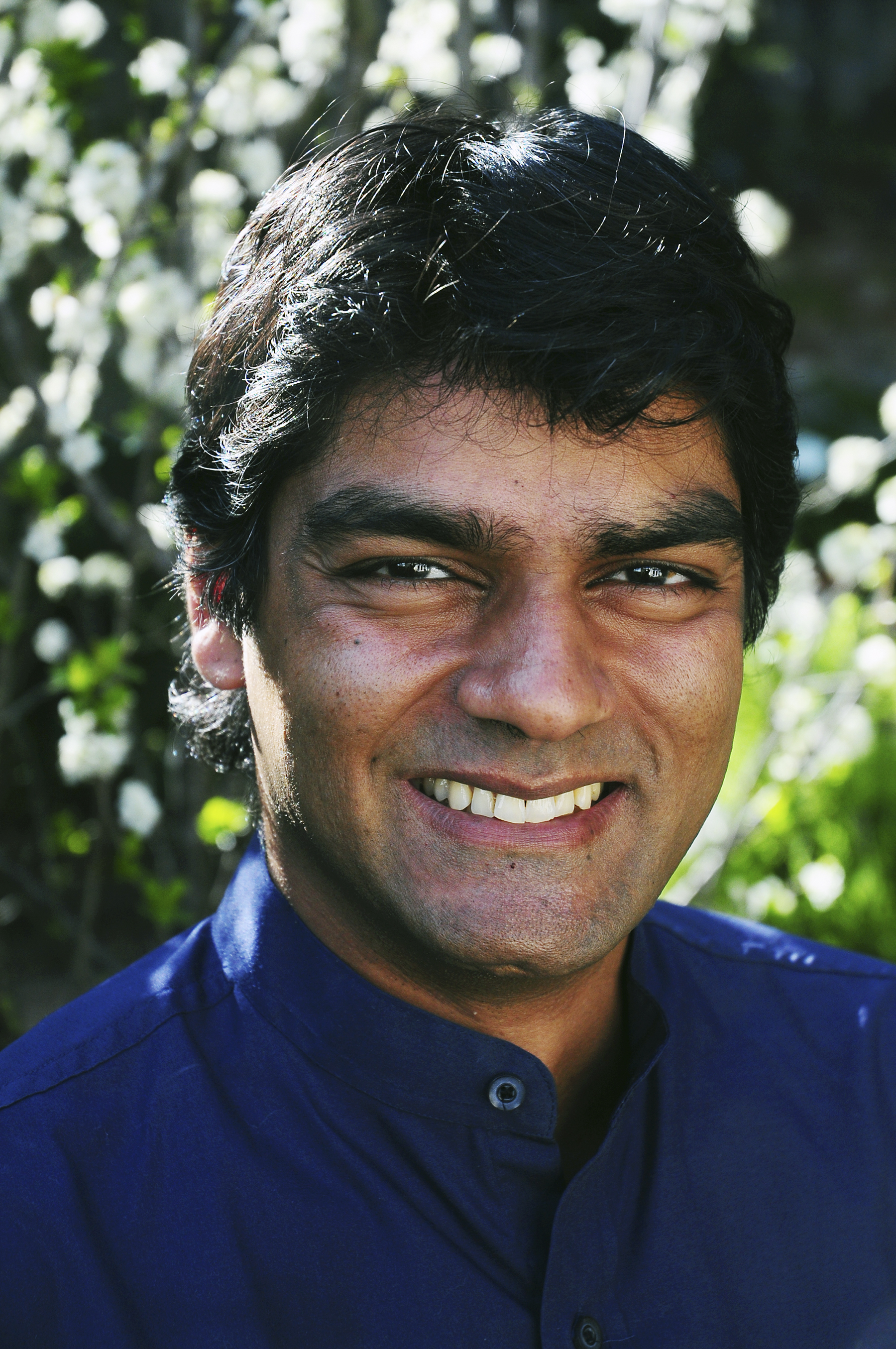
Raj Patel is the author of two books about the construction of the modern world. In Stuffed&Starved, Patel shows us the true nature of the global food system, and how the concerns of both producers and consumers of foods have no relevance in a system which is geared exclusively towards extracting profit. In The Value of Nothing, he similarly shows how the pricing mechanisms of the global marketplace bring little benefit to anyone other than corporations. Although these path-breaking books are essentially about economics, Patel’s deals with the world not in terms of economic theory, but through the course of historic and contemporary reality. Without a note of conspiracy, he shows us the simple but incredible truths about the structures and institutions that attempt to rule our lives, fairly successfully for the most part. I spoke to him about these two remarkable books.
Peter Machen: Hi Raj. Thanks for talking to me. In both The Value of Nothing and Stuffed&Starved, you talk about the need not only for the global North to cancel the debt of the global South, but also for reparation payments from the North to the South, as compensation for colonialism, post-colonial imperialism and the impact of climate change which has largely been created by the actions of the North. I completely agree with your position that such reparations are just and would help to improve global equality, but do you think that there’s any kind of chance that reparations would ever happen?
Raj Patel: Is it easy to imagine that governments responsible for slavery and colonialism will ever open their wallets and say ‘sorry’? No. But everyone agrees that it’s wrong to profit from crimes, and it’s hard to think of anything more profitable or violent than colonisation. To demand reparation is to demand justice from empire. Che Guevara had a line about ‘fighting for the revolution that you will never see’ and it’s worth remembering that no matter how unlikely they are to succeed, the demand for reparations remains a just cause.
There’s also an instrumental reason to persist: demanding justice for empire’s past crimes makes it easier to demand justice for its present ones. Climate change is an on-going harm –
300 000 people die every year from it. A vigorous push for reparations makes it easier to organize and achieve victories for today’s victims.
PM: The failure of modern democracies to look after the interests of their citizens is a central theme that runs through both of your books. And one of the suggestions you make, based on examples from around the world, is that much greater participatory democracy needs to take place at a local or municipal level. But one of the things that often needs to happen for this to take place is that apathy needs to be displaced. Do you think that this apathy, where it exists, is a result of people’s alienation and isolation from real political processes? Or could it be something more intrinsic to human behaviour?
RP: I think we’re living through a time that reminds us quite how global, and fundamental to human nature, is the yearning to govern ourselves. From South Africa to Libya to the US to China to India, you can find protests in which people are anything but apathetic. More than taking to the streets for a couple of weeks, people are ready for the long haul too. In North America, where it seems like indolence toward government reigns supreme, over 200 cities have food policy councils, in which ordinary people are working together to make sure no one goes hungry in their municipalities ever again. What needs to be plucked out is not apathy, but the far more powerful illusion that we are impotent in the face of our governments. Luckily, there’s something in the air right now that reminds us quite how powerful we can be.
PM: In Stuffed&Starved, you talk a little about the conscientised consumer and the limits faced in the range of actions made available to them. For example, you refer to yourself as supporting fair trade products but also recognise the limits of fair-trade in challenging the systemic inequalities in the global food system. Do you think that there is an authentic place in the globalised marketplace for the conscious consumer? Or do you think that direct action is the only way to make a real and lasting difference?
RP: I think we can all agree that ethical and thoughtful consumerism is better than wicked and thoughtless consumerism. And there’s a gamut of things that lie between ‘smarter’ shopping and throwing a brick through a McDonald’s window. In San Francisco, for instance, we mobilized health professionals, small businesses and concerned parents to pass a health ordinance that prevented McDonald’s from putting toys in their Happy Meals. It was a small but significant victory – it meant that we were able to beat back, just a little, the wave of inducements our children face to consume junk food. Of course, the American Pediatric Association points out that advertising anything to kids under the age of 8 is unconscionable – kids can’t tell the difference between advertising and lies. It’s why more children trust Ronald McDonald than they do their high school science teacher.
Our small legislative victory in San Francisco made us just a little bit freer, as parents and citizens, to encourage our kids to do the right thing. True, the playing field is still tilted toward the fast food giants – for every dollar spent persuading kids to eat the right thing, $500 is spent persuading them to eat things that are harmful to them. That’s why we’re also taking on everything from the quality of school meals to the availability of gardens to low wages to ensure that everyone in our city has the freedom, time and money to eat well. All of this happens through direct action, and none of it happens through ethical shopping.
PM: At the same time, the linguistic act of talking about ourselves as consumers, conscious and enlightened or not, keeps us within the discourse of the food system. Can you think of a more appropriate term than ‘consumer’?
RP: You’re absolutely right. I think it’s important for us to recognize our many selves – citizens, friends, lovers, community members. The Italian Slow Food movement encourages us to think of ourselves as ‘co-producers’ of food, as collaborators in the great chain of growing and eating. Thinking of ourselves as human beings with rich social connections, rather than utility-maximising individuals, is vital if we’re to take on some of the powerful institutions and groups that take away our freedom in the food system, or anywhere else for that matter.
PM: It’s possible that one of the reasons that middle class people who care about such things are reluctant to participate in direction action is because such action invariably induce a violent response from the state. All around the world, from Durban to Rio to London to Beijing, such protests usually get met with police batons and rubber bullets – if not real bullets. And if the middle-classes deign to join the protests, their class status offers them no protection from police brutality (although it will no doubt help them get out of jail more quickly if they get arrested). But while it might sounds like paranoia to many, for me this is ample proof of the fact that we live in a global police state, which allows our freedoms to exist within very defined parameters. Do you think that this is an accurate reading? Or am I indeed paranoid?
RP: It certainly appears as if we’ve the right to free speech just so long as we don’t actually try to exercise it. Especially after the terrorist attacks in the US in 2001, governments around the world used the opportunity to ratchet up surveillance of citizens, lumping together dissidents under the banner of ‘terrorists’. Protests these days are all too often militarized and scary affairs. But it’s not always true that the police are mere jackbooted thugs. In Wisconsin, for instance, police were called upon to arrest the pro-union protesters. Not only did the police refuse to haul the citizens away, some police even joined the protest.
PM: Towards the end of Stuffed&Starved, you write about food corporations acquiring medical product lines which sell products to counter the obesity caused by their primary products. The increasing consolidation and co-operative behaviour between drug companies, chemical companies, seed companies and the food industry, suggests to many on both the right and left a conspiracy in which the same companies that are making you sick with their subnutritious food are selling you the medicine to make you better. Do they have a point?
RP: Most of the most pernicious behaviour in modern capitalism isn’t a conspiracy – it happens in plain sight. So: Nestle, the world’s largest chocolate vendor, is also the owner of the Jenny Craig weight loss brand. Unilever owns Ben and Jerry’s ice cream, and Slimfast. All the major food companies are interested in ‘nutraceuticals’ – foods that have some sort of pharmacological health benefit associated with them.
None of this is a conspiracy – it’s just good business. We oughtn’t to be surprised that corporations commit capitalist acts. Companies are legally bound to generate profit for shareholders, and, if they don’t, their officers will be fired. But that’s why we need to be suspicious of corporations offering ‘win-win’ solutions like Diet Coke Plus – Coca Cola’s attempt to eliminate the need for a good diet by bundling a dose of vitamins with its zero calorie drink. If the issue is that people are working too hard and aren’t rich enough to afford the time to enjoy decent nutritious food, then the problem really isn’t that their diet cola lacks nutrition. These quick fixes prevent us from tackling the deeper problems of inequity and injustice in our food system, often caused by the very companies peddling snake oiled solutions.
PM: At home, I grow all my own salad ingredients, and, to a less successful extent, vegetables. I often seek growing advice from websites and what I find very interesting about these websites and forums is that most people who are involved in small-scale farming of any kind recognise it as a political or anti-corporate act, while people who are soley supermarket consumers seldom recognise the political nature of food in any great magnitude. Is it possible that the simple act of growing your own food is both a political act and a politicising act?
RP: I think you’ve hit at one of the most important ideas here, Peter. Ask an American ten-year-old where tomatoes come from, and they’ll say ‘supermarkets’. Most kids in the US have no ideas where their food comes from, and I fear a similar trend in South Africa. The saddest thing is that kids have no idea that growing food can be almost as pleasurable as eating it.
I work in support of an ‘Edible Schoolyard’ near my home, where low-income children learn how to grow food, and then learn how to cook it, and then learn how to eat it around a table without the TV on. And kids start engaging with one another, they act out less, and they teach their parents how to cook too. One of the most important parts of the food movement these days is that it recognizes that pleasure can be a political rocket fuel, that pleasure is something that needs to be democratized. That means organizing so that everyone can grow food, so that everyone has the land, knowledge, time and money to do it. It’s a living embodiment of the old Emma Goldman line, ‘I don’t want to join your revolution if I can’t dance.’ Growing your own food can certainly be part of a delicious revolution.
PM: Raj, thanks for talking to me.
RP: Thank you, Peter. Looking forward to sharing a salad when I’m in Durban.
A dog is caught between two lanes of traffic on a road in Guyana. Women avert their faces and close their eyes to a dust storm on an Angolan street. Two Civil Defence Force militia men stare into the camera on a jungle path in Sierra Leone. A young woman from a displaced family gazes out across a barren Eritrean landscape. And in Jerusalem, ancient grave-stones look like strewn rubble, cooled off and discarded by the volcano of history.
These are the images from the lens of Guy Tillim. They all share a remarkable beauty, tinged with a sense of intimate grace and aesthetic restraint. Yet the reality from which they have been plucked invariably exists in sharp contradiction to the distilled photographs which result and which often find their homes on gallery walls and in art catalogues.
A photojournalist working mostly in Africa, Tillim has spent much of his career journeying through the continent and beyond, wading through the heart-wrenching aftermaths of civil wars and their resulting political and economic disasters.
From Angola to Afghanistan, he has documented brief fragments of transcendent humanity in landscapes which have been all but completely dehumanised.
I ask Tillim about the fact that these photographs seem to be artistic objects before they are informative.
“Ja,” he responds, “That’s something I think about. In these places, where people are living, often in reduced circumstances or close to war, I’m there ostensibly as a journalist. But you’ve got to ask yourself certain questions, and one of them is why you are there. And there are no easy answers.
“You are confronted with suffering, with people who need help, and you’re there only to take pictures of them. It’s quite tough sometimes. And you wonder to what extent you can be useful at all. And then you question your motivation. Are you there in order to tell people’s stories? And if you are, how effective are you?
“And often you realise that you’re not very effective at all. Firstly, because you’re probably not up to the task. And secondly, because the world doesn’t care that much. I’m not saying it should. I mean, I wish it would, but I don’t think it does. And I don’t know how to change that and I don’t think that’s my mission. I don’t think that’s what I set out to do in the first place.”
Does he know now, after all this, after all these wars, and all these photographs, what it is that he set out to do?
“Frankly, no. But you do set yourself on a certain path. And you choose the path depending on where you come from, on what happened to you, on where you grew up and so on. And where we grew up – here in South Africa in the ’70s and ’80s – our lives were quite circumscribed. There were a lot of barriers.
“I remember taking pictures for the first time – I think it was during the mid-’80s – and I was quite conscious of the fact that the only reason I wanted to take pictures was because the camera enabled me to cross those barriers. It was only at a later point that I became interested in the pictures themselves, whatever import they might have built in my life.”
And does the work of a photojournalists ultimately have an impact on the world?
“I think it does to some extent. People become aware of wars and mayhem in distant place because of journalists. But the question is, I suppose, to what extent do they become aware, and how accurate is the information they are given.
“Yet, if there is an event or catastrophe, we wouldn’t hear about it unless certain journalists – and I’m not one of them – told us what was happening.”
As photojournalism goes, Tillim’s pictures are remarkably oblique. They wear neither their content nor their hearts on their sleeves. The familiar, rather direct language of African photojournalism is absent. The starving baby, the child-soldier and the voting elder are replaced for the most part with almost abstract images.
A strange decontextualisation happens, in which the image and its meaning transcend their historical specificity. And Tillim, in the process, breaches the gap between photojournalism and fine art.
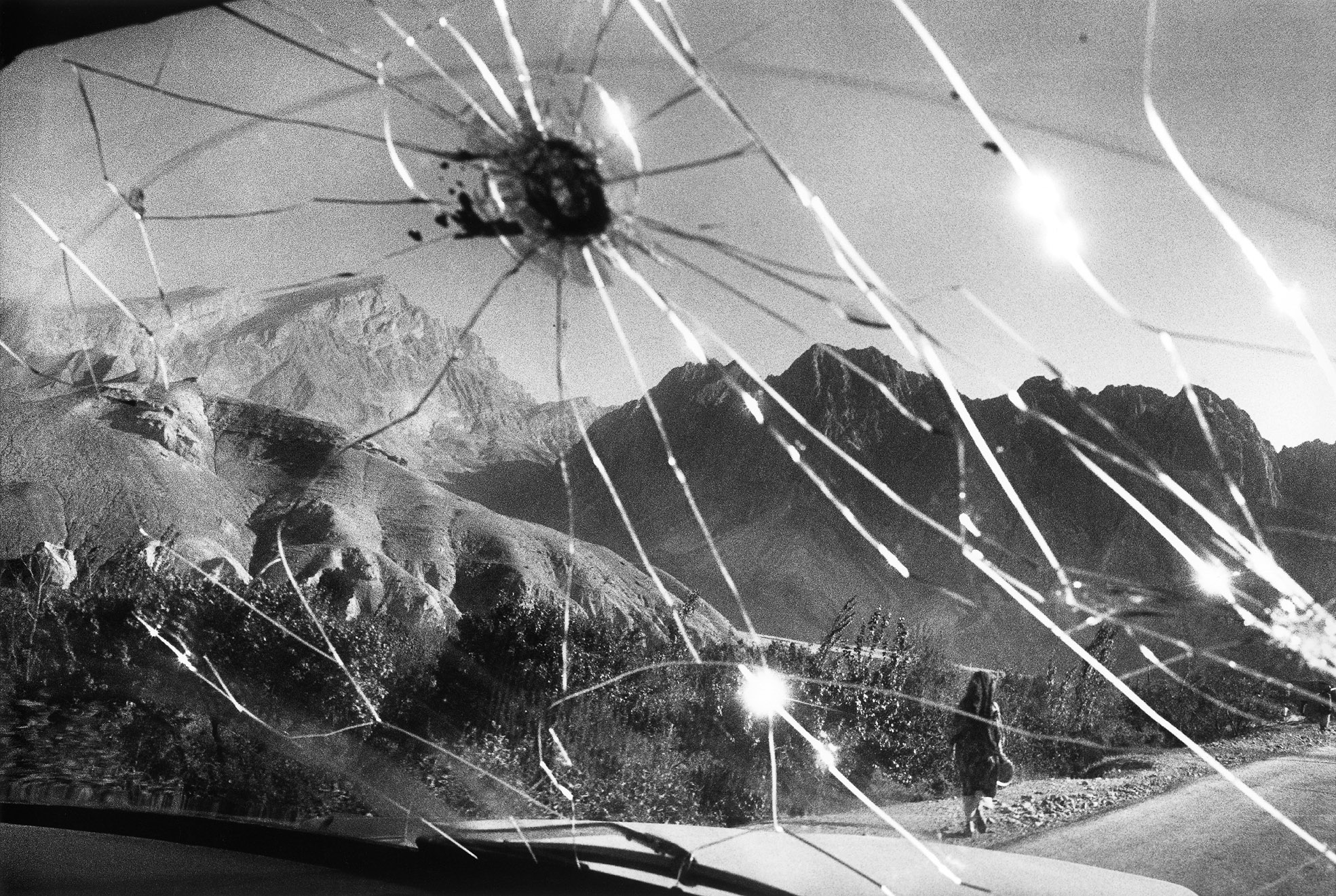
In one picture, for example, we look through a cracked windscreen on to mountains in Afghanistan. In the corner of the picture a figure is walking along the same road being travelled by the photographer.
This is, in fact, the road between Kabul and Mazar-i-Sharif and the picture was taken in 1996. It is a simple and extraordinary image, the intricate cracks of the windscreen given a near religious beauty by the glinting sunlight.
As I page through the catalogue for Tillim’s Departures show and think about my conversation with him, this cracked windscreen comes to represent a rather obvious metaphor for photographers and, specifically, for Tillim himself.
The rock – or bullet – that must have caused the damage has left a dark centre of densely fractured glass that looks like a pupil, and the cracks that radiate from it give the impression of an iris. So it is an eye –the photographer’s eye –and it is also a barrier, a boundary.
After more than 20 years of using his camera to cross borders, he cannot cross that final frontier. He can visit these places but he cannot stay, will not stay. He cannot walk in the shoes of another man or woman. He cannot break through the shatterproof glass, even for the split second during which the image is snapped up. And the photograph feels like a realisation. It feels like Guy Tillim’s road to Damascus.
Of course, this is my interpretation and Tillim might be irked with this reading. But regardless of actual truth, the metaphor resounds.
I ask him what emotional toll his travels and images have taken. “We are all affected by these things. We’re affected by the war in the Congo, whether it’s by refugees arriving in our country or by not being able to trade goods with our neighbours. And we’re affected in other ways, psychologically, spiritually. And I think these have been interesting boundaries to cross, as a person. And in so doing, I might find within myself some moral courage.
“But I’m not so sure anymore. I don’t regret anything. I don’t feel scarred. In a strange way, I feel privileged to have been allowed to see these things by the people that are undergoing them.” He says it quietly, truthfully and stresses that he is no gung-ho photographer, that he doesn’t regularly go to the centre of Africa’s hot-spots packing his camera like a revolver.
But I don’t quite believe that Tillim bears no scars from his vocation. It’s not that I think he’s lying, I just think that maybe he’s found some degree of peace with the damage and the contradictions central to his work.
“I’m a tourist in these places,” he says. “I don’t live there. And I’m struck by that gulf between me and the people who live there. And there’s really not much way of crossing that. Unless you take sides and become part of that situation. And I’ve never somehow had the inclination or, perhaps, the courage.
“I think a lot is made of journalists who move through this valley of the shadow of death. But they’re there for such short periods. And the extent to which they move through it varies enormously. I’m not a war correspondent. And I’d hate you to think that.
“You’re doing a job and there are certain parts that require some courage, yes. But it’s not that you’re ducking bullets or missiles all the time. Mostly, the worst part about these trips into places where people are having a rough time, is coping with your own doubt. About who you are, and about the situation. And that’s probably the hardest part.”
In the midst of all this uncertainty, this dearth of conclusions, I take recourse in some of Tillim’s own words in the foreword in Departures. “Of course, there is always this: To change what is ugly and brutal into something sublime and redemptive. So I have photographs I like for reasons I have come to distrust.”
Once, we believed that cameras could capture truth. And sometimes, occasionally, almost by mistake, they do.
I am a conspiracy theorist. I am walking along the sunbleached sands that line the stretch of coast between Blue Lagoon and Battery Beach in Durban. It is a breathtaking November day, one of the few properly hot days that the weather has granted us this far into the year.
I remember November days in Durban in the late 1980s. The onset of summer both promised and threatened in the slowly building heat. The humidity had not yet arrived, spring breaking its smells and colours into the air, the odour of chlorine rising up from municipal swimming pools. The sweet stench of cut grass in the air. Urban reclamations of spring rites as ancient and predictable as people.
Now, a decade and a half later, the seasons pile into each other like a motor accident, a rubik’s cube of weather patterns that make nonsense of the notion of discrete seasons. And the worst natural disasters on record have all happened since the caring ’90s opened its arms in hope and environmental awareness.
Lining the watermark on this crisp, beautiful day are scores of jelly fish. Lying flat on the sand, deprived of their fluidity, they are arranged along the high tide mark of the last waves that brought them to their end. They look like a flat, squelchy musical score.
They are also very effective at dissuading me from swimming in the viscous embrace of the Indian Ocean.
I am a conspiracy theorist. And I can’t help connecting these jelly fish, whose beached numbers I had never seen until a few years ago, with the environmental damage caused by the rampant onslaught of uncontained capitalism and globalisation.
Of course, if you say these things too loudly people think you’re nuts, or at least a bit odd. And while there’s probably no connection between the two, what interests me is the feasibility of the notion, the fact that it is possible and that all possibilities should be entertained.
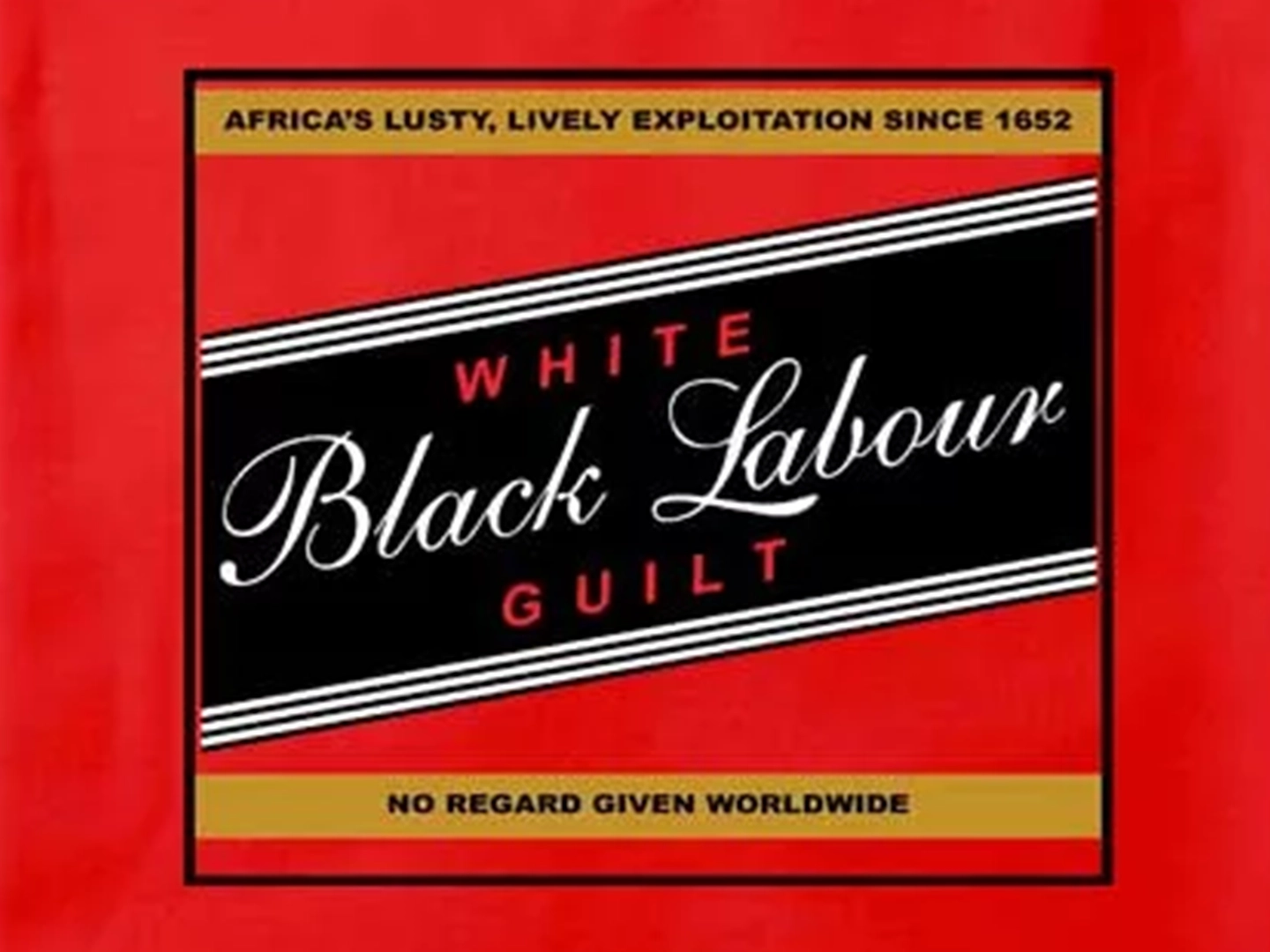
I am walking along this coastline with Justin Nurse. Nurse is the progenitor of Laugh It Off Promotions – the company that produced the famous “Black Labour White Guilt” T-shirts that instigated the ongoing SAB Miller legal fracas and which catapulted Laugh It Off into the headlines. As well as offending a whole catalogue of other brand names with his T-shirts, and incurring a small mountain of lawyers’ letters, Nurse has just released the Laugh It Off Annual, an attempt to inject some political energy into South African youth culture. It is, as Nurse suggests, a cultural snapshot of the country’s youth. A vibrant delight of a book, it is an explosive antidote to the hegemony of You magazine culture.
It is a place to think rather than to simply absorb. Featuring contributors as diverse as Tumi Molekane, Pieter Dirk Uys, Naomi Klein, Waddy Jones, Toast Coetzee and Zapiro it tells us more about our collective soul than possibly any other single publication.
I am not really a conspiracy theorist. And neither is Nurse.
He is a rational, passionate observer and commentator whose primary medium is bastardised logos on nicely cut T-shirts. He also has the unfortunate desire to want to change the world. But despite the fact that we are both actually quite rational beings, the things that we talk about, the things that are written about in his annual, are, for the most part, usually relegated to non-publication.
I am ostensibly taking this walk with Justin to talk about the annual. This should be something of a PR exercise for him, something to accelerate sales of the substantial volume. He has, after all, been trekking around the country, introducing himself to booksellers and ensuring that his product gets good positioning and support from the merchandisers. He should similarly be working on the hard sell with me.
But we end up talking about other things, or at least other aspects of things.
When I last saw him, Justin spoke enthusiastically about the annual, about how it was going to be something that was going to blow the world, or at least the little world of middle class South Africa, right open.
Now he has completed the book, he feels a little deflated. All the joy was in the doing, he says, not in the achievement. And now that it is done, he is experiencing a classic case of anticlimax. But more than that, he has realised that this latest little barb of humanity in the face of the whirring beast of globalisation, isn’t going to split the world wide open. Because nothing, it seems, can do so on that kind of scale, except capital itself. In the last decade we have seen the rise of political and economic consciousness across the globe, with protests from Seattle to Bombay. Access to information via by the internet and the increasing popularity of politically expressive writers such as Arundhati Roy and Naomi Klein all fuel this awakening. And the world’s mind has changed on some fundamental level. Increasing numbers of people are aware of these inequalities and try at various levels to express their discontent. And yet the beast moves on, constantly feeding the desires it has created, while failing to satisfy even the most basic needs of a large propertion of the planet’s people.
This imbalance is the crux of the matter, but reading through a century of writings about political economy, from Marx to Friedman, it is always impossible to remove the thinker’s own set of circumstances from the thoughts, and the world in which they were born. Justin and I are no different. The world seems even messier when you’re feeling a bit down, and it is a difficult process to separate the two.
We have both recently read French writer Michel Helouabach’s Atomised, a searing account of humanity that offers little hope for a species that cannot help but define itself by its mortality. It is one of those life-changing books, destined to become a classic. But the book’s power flattened Nurse. For someone who wants to change the world, or at least wants the world to change, Helouabach’s predictions for the possibilities of peace and fraternity are somewhat shattering.
And so, his work for the year done, his battle with corporate giants on hold, Nurse is planning to catch a bus to Malawi, hang onto the edges of the great lake and try to piece together those shattered pieces. Try to make some sense of this damaged world.
In the meantime, hopefully tens of thousands of consumers who are normally more circumspect will buy the Laugh It Off Annual. Not just because it might change their world a little, but also because it is a very fine product – a snapshot of our culture that reveals a dynamic, self-aware society that is infinitely more exciting than the visions broadcast by the bulk of the mainstream media. It’s a labour of love and the love shines through.
But to return to the coastline. ‘This old world won’t ever change the way its been’, sang ’60s singer Tim Buckley. But Nurse sees one thing that might change the way that the mechanisms of capital and government work, since the protests of millions haven’t managed to impact sufficiently to instigate far-reaching change. That factor is environmental damage and all the repercussions that accompany it.
So when it is too late for even the middle class to have a healthy meal on their table or to breathe cleanish air, then, to borrow from a wise old Native American, and only then, will those who run the world, realise that we can’t eat money.
But, who knows, maybe we’ll be eating jellyfish sushi instead. And maybe someone, somewhere will still be making a profit.
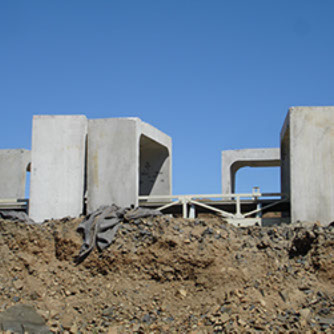
Twenty years ago, Natal Witness writer David Robbins, set out on a journey which began in Mtunzini on the shores of the Indian Ocean and ended in Port Nolloth on the western edge of Southern Africa. Robbins chronicled his journey in a book called The 29th Parallel, which, although a work of non-fiction, was written with all the narrative intensity of a novel.
I wasn’t aware of Robbins book when I first agreed to travel with three friends along this 29th line of latitude, which, like so many human constructs, is both imaginary and real. And unlike Robbins, who set out to explore notions of whiteness in Africa, I had no game plan. I was simply keen for a road trip, jumping at the chance to escape the city and explore the small towns of South Africa and the tarmac that binds them together.
Only a few days before we departed did I find out that our travels were to be based on Robbins’ book. And given that we had only four days to cover as much road as possible, we weren’t going to retrace Robbins’ entire journey, only a section of it. So, sadly, we were barely going to make it two thirds of the way to the icy Atlantic.
We would also be doing the journey in reverse, driving solidly for a day and then turning around and slowly returning home, zigzagging along the parallel.
We drove out of Durban in the waking light, the almost full moon having just set. We followed the smoothly engineered curves of the N3 until we reached Harrismith from where we turned westward. From there, we drove through the heart of the Free State. Through Bloemfontein, Bethlehem, Kimberly, and on into the Northern Cape, stopping only for lunch, to refill the car and for the occasional photo opportunity.
Our race came to a halt, however, when we drove through the small town of Boshoff in the Northern Cape. Set against the arid scrubland which surrounds it, Boshoff is a tiny town of idiosyncratic houses and gardens fleshed with greenery. But apart from the constant attention needed to maintain such a verdant affront on the dust, what impressed us most was the diversity of design, a happy counterpoint to the generic uniformity of the cluster houses that have become South Africa’s architectural currency. Boshoff was made all the more charming by the presence of what looked seemd to be a market garden on the main road, sprouting a small abundance of vegetables on a plot the size of two or three of the houses adjacent to it.
In Griqwa Town, a long drive from anywhere and the next stop after Boshoff, there was no abundance of vegetables. In fact there were hardly any vegetables at all and there didn’t seem to be an abundance of anything. But it suggests something fundamental about our society that even when fresh produce is hard to find, a wide range of liquor is readily available. We grabbed some sixpacks from a bottle store for a night in the bush at Witsands and were about to head for the Tigers Eye bar (semi-precious stones constitute the core of Griqwa Town’s economy) when one of our party – the driver – pointed out that it would be prudent to get to our accommodation before the gates closed.
Before we left, I went into the local Pep store and brought myself a pair of cheap sunglasses to counter the road’s glare. As I was making my purchase, I spotted a handsome, extravagantly dressed young man who would not have looked out of place in the gay districts of London or New York. “How is it to live in Griqua Town?” I asked across the checkout counter, expecting perhaps complaints about small town life. “It’s magnificent,” he said with a proud sashay of his head. I’m pretty sure that he wasn’t being ironic, but I struggled to discern how life in the arid, dusty isolation of Griqua Town could be magnificent for such a flamboyant young man.
Part of me would rather not tell of the beauty of Witsands. And therein lies the central conflict inherent in travel writing – that in telling too many people about a place, it becomes ruined by overvisitation. But Witsands, on the South Eastern edge of the Kalahari, is so far away from anywhere that I think it’s safe to describe the beauty of the dune we clambered up to reach a view of the setting sun.
We arrived at the gates of the Witsands Resort just minutes before they shut, quickly located our relatively luxurious accommodation (complete with airconditioning) and headed off for the dunes in a dying light that will always keep a place in my memories.
At the top of the dune, it looked like another planet. The white sand turned golden by the orange sun, a series of sand bunkers stretching into the endless horizon. I lay on the fine, powdery sand and watched the sun set behind a clump of brittle desert grass as the sand washed over my body. So relentlessly beautiful and also so far away from Eden.
We drove back to our quarters in a landscape almost metallically luminous in the moments next to nightfall, buck springing their way across the veld, occasionally following the motion of the car, their animal perfectness nudging against my soul with three quarters of my body out the window.
The next morning when we drove back through Griqua Town, filling up the car and taking a coffee-break, there was no water in the town. The town pump had broken and the water in our coffee came from a local bore-hole. And again I found myself questioning the magnificence if not the vague charm of this parched, dehydrated town. And I couldn’t help but think that perhaps the magnificence about which the well-dressed young man was talking might be the magnificence of – finally – some degree of self-determination for the local Griqua community.
Departing once more from Griqwa Town, we saw the river for the first time, a swathe of blue slicing its way across the countryside bleeding out it greenery wherever it went. In his book Robbins tells us that the San people thought that this river, the Orange River which flows into the Vaal, was the mother of all rivers, and, as Robbins also says, it’s easy to see why. In the perpetual dryness and heat of the Northern Cape, this bounteous green does indeed look like the source of all life.
The Vaal reaches an apotheosis of greenness in the small and intriguing town of Douglas where we would sleep that night. Water is in such abundance in Douglas that in the local shopping centre – the horse shoe configuration around a large parking lot that most small towns have instead of malls – a fine mist is continually sprayed from under the eaves around the entire length of the building, even after most of the shops have closed. I found myself contemplating the San and their maternal river and what they might have thought of all this. And if only dust were the currency, the Platteland would be rich.
We had brunch in Douglas at a fantastic little restaurant called Die Koffie Pit which put most urban eateries to shame and which also doubled as a seller of Christian paraphernalia. The owner, who worked in the back with her staff, would have made Christ proud with her warmth, humility and desire to help. (I asked her if she could fill our water bottles for us and she returned five minutes later, the bottles filled with ice and water).
From Douglas, we headed for the so-small-it-barely-exists town of Plooysberg near Drie Koppe Eiland, in search of images that had been engraved into a dried up riverbed by the ancient people of the region. We struggled a little to find it, stopping at a farm along the way and encountering a wizened old man with not too many of his teeth left. He spoke only Afrikaans and none of us are too good with die taal but after a while he worked out what we wanted. “Aah, die tekens,” he said, with a click of understanding on his face, and then proceeded to direct us. When he said “die tekens”, it was like a moment from a cheap thriller, the word teken meaning both drawing and religious sign.
We eventually found our way to die tekens with the help of Ben du Plessis, the farmer whose family has for generations owned the land which bears the ancient engravings. A rough-but-gentle and thoroughly generous soul, du Plessis led us down to the river and then gave us a small guided tour of the engravings. We followed him along the banks of the Orange River, my feet burning on the hot rocks and pierced by tiny thorns. He pointed out the abstract drawings, but being a farmer he was more interested in the detailed renderings of the animals.
I watched him with a layer of irony as he traced his walking stick along the paths of the engravings. And I thought of all the conservators who would balk at him doing so and would enthusiastically turn this into a world heritage site, complete with a tourist office and forms and permits and brochures. And I thought – selfishly – how we could never have had those moments of joy and relaxation on the rocks, had we been surrounded by snap-happy tourists, even as we were being snap-happy ourselves.
With the burning heat of the day, our attention moved to the water which still flows adjacent to the carved rocks, and which collects in a dam built by the farmer’s family in the mid 1980s, before overflowing onto smooth, algae-covered rocks, swirling into a small pool and continuing on its long and wayward journey to the sea. We drank a couple of warm beers, played in the water and before we knew it the sun was once more setting.
We returned to Douglas that night, partly because I had left my shoes at Die Koffie Pit, partly because it was the closest place to Plooysberg and partly, I suspect, because we wanted to have another wonderful breakfast. But there was no room at the inn that night. This was apparently due to the fact that many of the bed-and-breakfasts in town – and there are many for such a small town – are now being occupied by visitors who have come to stay semi-permanently. After a few phone calls courtesy of a local hotel-manager, we managed to find some accommodation in a self-catering spot a few kilometres out of town. And the less said about Vakansie Oord the better. Suffice to say that self-catering didn’t include so much as a sharp knife, let alone a kettle or a fridge, but it did include a braai and the hottest, most airless rooms money can buy.
The next day, the river kept us company for most the day, intermittently disappearing and reappearing, taking us past Ficksberg and Fouriesberg and onto our final destination of Clarens. After a long drive through the faded gold of the free state, this lush, green valley was truly a piece of Eden and I was reminded of the hostess at Die Koffie Pit, who, when we told her that we were going to Clarens, said warmly “O ja! That’s my valley.”
We arrived at dusk and set about finding accommodation for the night, immediately falling into what seemed like love with the quaintness and hamletness of it all. Clarens at dusk looks like a 21st century version of a burgeoning 19th century American mining village as seen through the eyes of JG Ballard. We found a generous stone cottage called Sweetie Pie, complete with all the fixtures you might want after four days of driving through dust. We phoned the number on the gate and Sweetie Pie was ours for the night. But not for the following night – Friday – when hordes of Jo’burgers would arrive in the town, booking it out as they do every weekend.
We found dinner at a place called Friends which I’m certain was named after the TV show. We were still loving Clarens, despite the buffeting dust storm that covered us in a thin film of brown and which forced us to move inside when our food arrived – in the Free State there is dust even in Eden. We ate our food and moved to the bar where we proceeded to get very drunk, free from the strictures of having to drive, Clarens being small enough to comfortably walk around. Having befriended the locals, we headed off to a venue called the View Site, where we had been told there was a party happening.
When a couple of us arrived at the View Site, it was almost empty. And the handful of inhabitants didn’t exactly make us feel comfortable. It felt like white South Africa circa 1985 mixed with a good dose of America’s Deep South. Aggression oozing onto the bar counter, racial epithets flying, even the local hippy boy from Friends telling me about how he lived with the bushman for five months and how it’s a scientific fact that black people have different receptors in their brain to white people which makes them incapable of handling alcohol. My friend and I looked at each other speechless.
Downing our drinks, we left, finding the rest of our party at the bar next door, which was free from racial epithets and aggression but still felt a whole lot like a David Lynch movie set in the Deep South. I hovered between the bar, the pool table and the parking light outside, where I found myself comfortingly dwarfed by the majesty of the mighty Maluti Mountains.
The evening continued and I could probably write a novel about its events, but suffice to say that in the rift between our initial infatuation with Clarens and the night’s event, something soured a little – perhaps a sense of complicity, perhaps an unavoidable sense of whiteness.
The next morning we walked around what turned out to be a shopping paradise for those of the arts-and-craftsy persuasion, complete with espresso bars, restaurants and a particularly good book store. And it’s easy to see how Clarens, with its quaintly constructed notions of authenticity, would appeal to those who live in the shadows of the Jo’burg malls.
Clarens is situated right on the edge of Golden Gate and it was through that gorgeous expanse of rock that we passed on our way home, stopping briefly for a roughly constructed picnic and a cigarette, before making a rain-swept and mist-enshrouded beeline home to the lushness and safety of KwaZulu-Natal.
Having completed our journey, I set about reading Robbins’ book. Twenty years later, it’s a compelling read, possibly even more so now than when it was first written. It allows us, with its careful juxtaposition of the objective and the personal, to see how much South Africa has changed, and how much it hasn’t. It is filled with prophesies from ordinary South African citizens, many of which have come true, and many of which haven’t. But one of the book’s central premises – that it is difficult to explore our national reality in our cluttered cities – remains true. In the small towns of South Africa and the vast, mostly unpopulated spaces in between, things are somehow clearer and starker.
Another thing which weighed on our minds intermittently was something which almost certainly wasn’t as much of a concern for Robbins, who, although writing after the energy crisis of the 1970s, was nonetheless writing before the term carbon footprint had been coined. I love the road – it is one of my greatest loves – but it has become tainted by the very thing that gave it its existence. Cars have become the enemy of the planet and the road trip now has a price on its head. And I dream of the solar-powered electic car that would give the road back its beauty and freedom.
But that is really a whole different story, a whole chapter in a history that has yet to happen. And I know that I will almost certainly sin once more against the planet and travel again along this line, both imaginary and real.
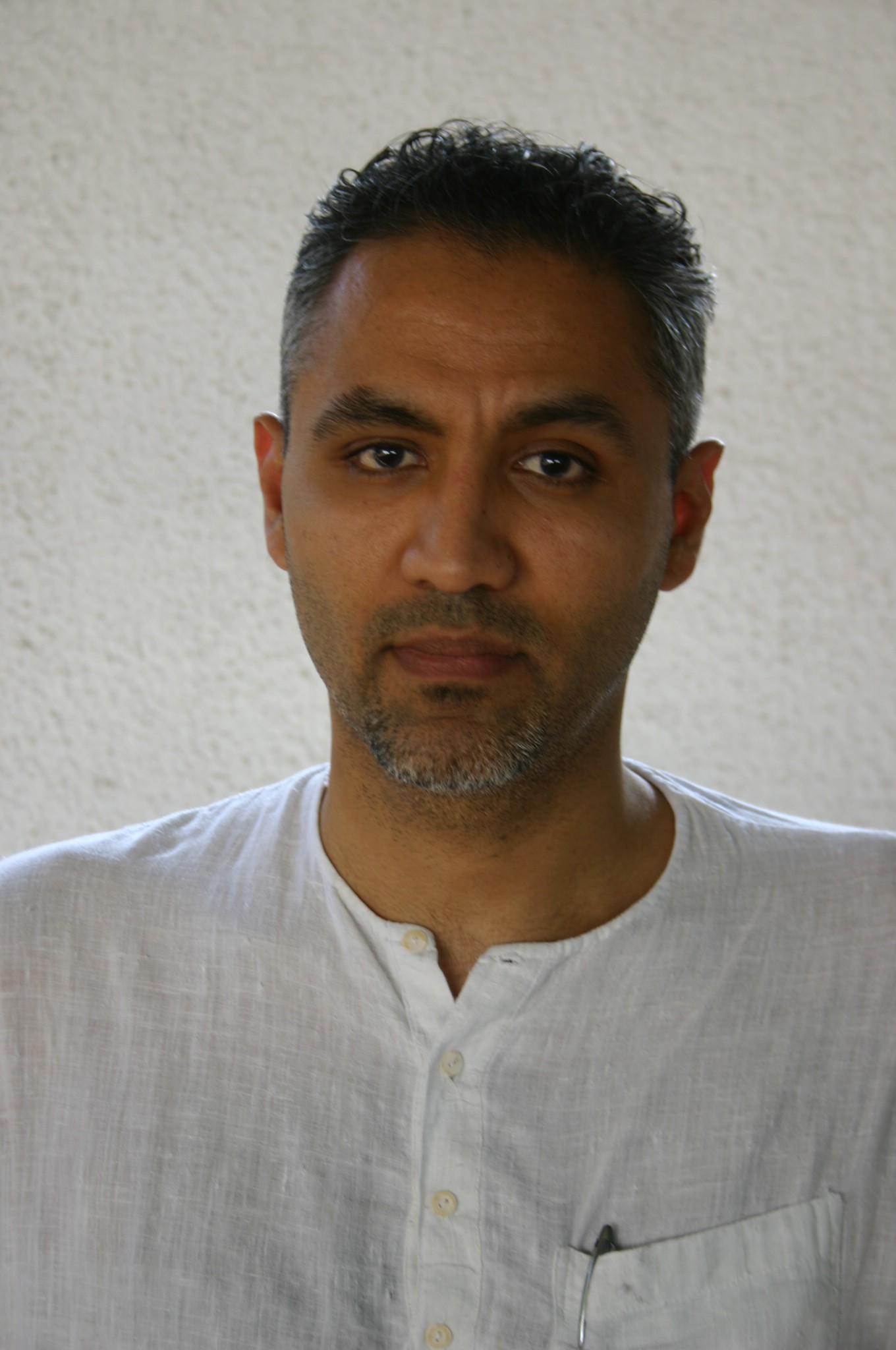
Peter Machen: Hi Ishtiyaq, thanks for agreeing to do this interview. Congratulations on The Silent Minaret, not just for the European Union Literary Award but for the fact that you’ve managed to produce such a unique and engaging book that covers such a breadth of human history.
Ishitiyak Shukri: Well… Thank you very much.
PM: I finished it about two weeks ago and it has stayed with me since then. I sit on my balcony at night and wonder where Issa is, what happened after he left his table. But I’m still not sure what his disappearance means to me. Does the ultimate recognition of the patterns of history show a path to freedom from conflict, or does it suggest that these things never leave us, that colonialism continues ad infinitum until it destroys us all?
IS: Perhaps I should start by saying that I wonder too what happened to Issa… the novel leaves me with that question too. If I knew the answer, I think I would have written it. But I don’t, so, like the reader I am also left with the loss of a character only ever glimpsed. What may have become of Issa haunts me too. He never revealed himself, even to me. As regards the patterns of history… I think the novel tries to grapple with some of them, to demonstrate the cycle of conflict and, as Issa postulates in his thesis, the perpetuation of colonialism and imperialism.
Now whether in the end, as you ask, that cycle destroys us all… I don’t know. That would seem to me a rather defeatist view. Colonialism and imperialism can, and have been resisted. And, I suspect, would hope, will continue to be, if not resisted or defeated, then, at the very least, demystified, identified and named.
PM: The book unfolds in many ways like a detective novel, but what is investigated is not only Issa’s disappearance but also the broader history of colonialism and terror. Was this an intentional mechanism or did it develop as the novel grew?
IS: A detective novel without the detective… a missing detective. I don’t know… it is hard for me now to untangle the investigation of Issa’s disappearance from the investigation of colonialism and terror. I think, as Issa’s thesis demonstrates, both were central. It is Issa-the-missing who in his thesis most intently investigates colonialism and its processes. So no, I don’t think it was an intentional mechanism, more a matter of, as you suggest, something that developed as the story grew.
PM: Is Issa based on someone you know? Or is he a fictitious amalgam of yourself? And the other characters? Kagiso, Katinka, Frances? Are they based on people you know?
IS: The autobiographical question! Was waiting for that one. Well, the easy answer is no. Fiction is not autobiography – they are very different genres. The more complex answer of course, is yes, by which I mean that one writes best, I think, if one writes about what one knows and has observed.
As Hanif Kureishi has said, writers observe the world around them and then translate it into fictional words, sentences and paragraphs. And even then, in trying to write about what one presumably knows, one soon realises that knowledge of other people is only ever partial, which would perhaps go some way towards explaining the partial representation of all the characters. They are all only ever glimpsed. Who can claim to know anybody entirely?
PM: The stateless moment when the old South African flag comes down and the new one has not yet been hoisted is for me one the most beautiful scenes in the book, the one that brings tears to my eyes.
IS: Gosh, well… I don’t know. The power of the pen to move, I suppose. I particularly struggled with capturing that moment – a very precious one to all South African’s I think, and rightly so. Not many countries have the benefit of such intense moments of reinvention – Britain could do with one – a moment when you see the old dying and the new being born there, right in front of your eyes.
So it is not easy to stand back from such a moment and be critical of it. But this has a lot to do with the mysterious process of writing because, in the end, I don’t think that I captured that moment. Katinka did. There is, I think, some truth to the adage that characters write themselves. And so I mean to say that of all the novel’s moments, I am myself… moved… that that is the one that touched you.
PM: Yes, I dream of a world without borders, without passports, one where the word ‘foreign’ has disappeared from our language, where monoculture and nationhood have given way to difference and diversity not in an advertising image but in a visceral sense.
IS: I dream that dream too, the difference between us is where we dream it. You dream yours in South Africa, which at the moment is celebrating its differences. I dream it in Europe, which is straining to contain difference. This is so well demonstrated in the General Deflection Campaign in the UK at the moment – where the Benetton ads stand in sharp contrast with the shrill Tory campaign posters with their hideous caption lamenting immigration, which I’ll refrain from quoting because no publicity is bad publicity.
PM: As a person I want nothing more than for all identity to dissolve, and yet as a writer I feel a responsibility to help build this new South Africa and I feel something akin to patriotism.
IS: Patriotism. The very word makes me shudder.
PM: But is South African patriotism different because at its best, South Africa is a celebration of difference and commonality? (And then there is also a patriotism being built that is hugely xenophobic and fills me with sadness).
IS: Patriotism is by definition xenophobic, parochial and, at its Greek root, patriarchal – of the fatherland. And we all know where that one has led us. So no, I don’t think any form of patriotism is any different to any other form of patriotism. And to me the danger of patriotism is most demonstrated in its opposite – to be unpatriotic – and the stigma and potential punishment reserved by the State for dealing with those it deems unpatriotic.
Let me say this about one particular manifestation of patriotism, which I have observed in South Africa – the prominent display of the national flag – the only other country in which I have seen the national flag more displayed is the United States, a country which also claims to celebrate difference and commonality. When did we become Americans?
PM: I really loved the characters of Ma Gloria and Ma Vasinthe. They provided a centre of calm, rationality and compassion and their relationship was just so real. They also provided the feminine alternative of love and nurturing in contrast to the masculine expression of war and oppression. I’ve always thought that the world’s problem could be solved simply by putting women in charge. Of course the structure of power are not going to let that happen, but do you think this is a ridiculously naïve position?
IS: Yes. And no. I felt it too. When I saw the footage of those planes flying into the World Trade Centre in New York, I thought it too – that men have ruined the world. I felt that even more with the retaliation that ensued and felt very strongly that the time had come to call a halt to the world and the way in which it does its business, and that the first thing men should do is acknowledge that they have wrecked the world and that they should hand the reigns over to women.
But then, Condoleezza Rice is a woman. Madeleine Albright who, when asked whether the half a million Iraqi children who died under sanctions was worth it and replied, “We think it worth it,” is a woman. “Blair’s babes” are women and there are women in the British cabinet who support the war. Thatcher is a woman and Britain is still reeling in the wake of her appalling legacy. Benazir Bhutto is a woman and so was Indira Ghandi who, when charged with electoral fraud, responded by declaring a state of emergency in which… well, in South Africa we know well the power the State reserves for itself when it declares an “emergency.”
PM: Do you see a light at the end of this tunnel for the planet? Do you think that the forces of global apartheid and war and violence and economic oppression are ever going to end?
IS: The Silent Minaret concludes rather bleakly on this matter, though Katinka, ever brave, offers hope. Much has been made of Issa – perhaps because we want heroes. Less has been made of Katinka – perhaps because we seldom contemplate female heroes. But at the moment I’m reading a paper by Issa Shivji, Professor of Law at the University of Dar es Salaam in which he concludes that racists and imperialists and, by my extension, warmongers and unfair traders, are primitive animals doomed to extinction. I hope Shivji is right. But whether these forces end or not, it is true that they will always find resistance.
PM: The ever-increasing disjuncture between reality and that thing called western morality is one of many things that is fragmenting Western consciousness. When I fill up my car at the petrol station I am linked in some way to the war in Iraq. It is almost impossible to remove oneself from the global context, and yet most people manage to live lives that tolerate or ignore all these things.
When the war started, a huge proportion of the planet stood up and shouted that it was wrong. Yet it happened and continues to happen with no end in sight. Does your own sense of outrage and powerlessness in the face of all this violence ever become too much for you?
IS: I would argue that it is not, as you say, almost impossible to remove oneself from the global context. It is impossible, and the example of the petrol station is a good one – we South Africans love our cars. The war happened and continues to happen not because people opposed it, but more because corrupt and powerful leaders willed it. I think the people across the world who demonstrated against the war in Iraq still feel strongly about it – across Europe many thousands marched in protest again on the second anniversary of the invasion of Iraq.
I think the difference for some, especially in those countries that have troops serving in Iraq, the difference now for some is that “their patriotic [– that word again –] duty is to support their troops” so that patriotism in effect muffles resistance. And I think Chomsky astutely identified the real question: not whether we support our troops, but whether we support our government. In this duplicitous climate, I think it admirable that the families of those British servicemen killed in Iraq debunked that patriotic mythology by taking their legal petition right to Prime Minister Blair’s front door this very day.
Yes, it is easy to be overwhelmed and to feel powerless in the face of so much extreme violence, but I would also offer that there are many ways of staying involved. For a start, just Google “stop the war” and follow the links. Much easier and no less significant than writing a book.
PM: To end, I know its up to the reader to decide, but as a hypothetical reader of your own book, do you think that Issa disappeared into the night to disappear as a person, to remove himself from this whole human mess, or to join what Blair would call ‘the forces of terror’, to become once more an active revolutionary in a world where violence is sometimes the only response to violence?
IS: A very hypothetical reader, indeed – I cannot read the book. But your question cuts to the heart of the matter – the role of the activist, the revolutionary, today. How does one oppose an arrogant supremacist ultimatum, which posits one of two options – for or against?
I picked up the pen. Yet nothing is simple – my companions who have reached for the sword argue, very eloquently, as persons of action often do, that my weapon assumes literacy and speaks only to the privileged. The truth is, as I’ve said, Issa never revealed himself or his intentions to me so that, like any reader of the book, I can only speculate. But as its writer, my speculation will perhaps take precedence, and that I cannot allow. Writers are dead remember.
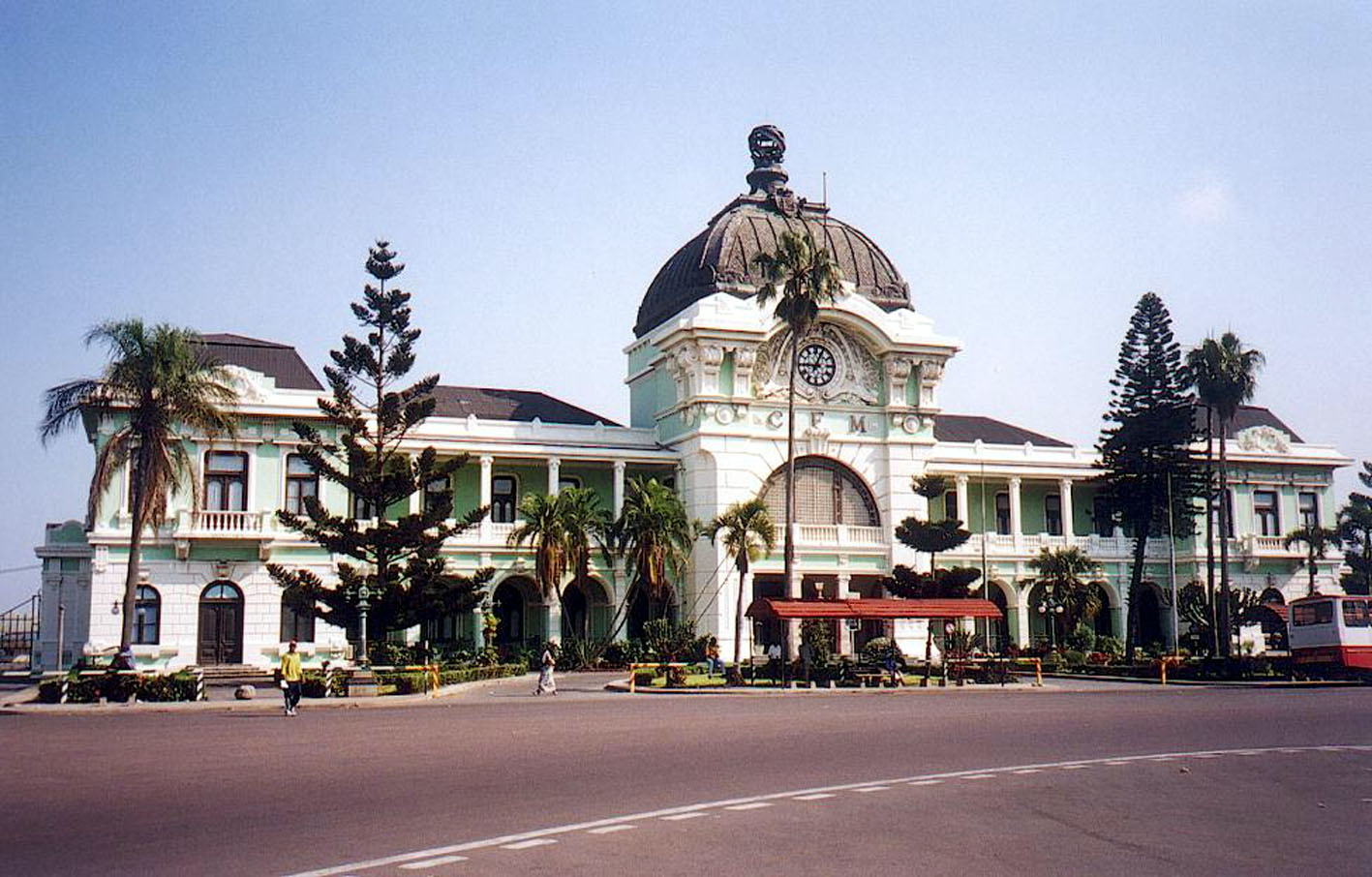
Socialism still walks the streets of Maputo. Any communist or socialist with any degree of fame (or notoriety, depending on the fickleness of history) has a street named after them. You can walk downtown along Avenida Karl Marx or Avenida Vladimir Lenine. Mao Tse Tung, Hồ Chí Minh and Albert Luthuli all have avenues named in their honour. And while the potholes and peeling paint that decorate the city might stand as a metaphor for the current state of socialism, the beauty of being in Maputo – the people, the buildings, the colour of the light – continues to offer hope for an alternative model of social and economic reality in Africa.
Maputo is an extremely poor city in an extremely poor country. Like South Africa, there is massive unemployment. Prices are higher and salaries are lower. Nearly everything is imported, refuse removal is minimal and the police are a law unto themselves.
Yet, for the most part, everything seems to work. There are far fewer beggars on the streets than in any South African city. You can sit at a pavement cafe drinking an excellent espresso and a delicately delicious pastry and not feel compelled to think you’re in Europe. This is Africa, pure, simple, beautiful, and without pretensions.
The Coca-Cola signs are coming, sure, and there are cheesy billboards advertising the consumerist promise of modernity – and in a streak of historic irony, some of the new construction is surrounded by hoardings painted with the ANC colours.
But the rabid consumerism that has come to characterise post-apartheid South Africa is largely absent from Maputo. Walking through the sprawling Xipamanine market in the poorer end of the city, or the more upmarket Mercardo Municipaledowntown, it seems the sellers outnumber the buyers a hundred to one. Only in the very specifically upper middle-class Supermercado does commerce begin to resemble anything like South Africa. And, apart from the curio sellers which line the roads where the hotels are located, bargaining will get you nowhere. Even in the shops, prices are standardised in the same way as they are on the streets of Durban, with hundreds of hawkers selling a range of identical goods at the same price.
And the people are almost painfully honest. Often I would leave vendors with 500 meticas change (about 20c) and without fail, they would run after me, clutching the coin to give back to me.
Service in Maputo is impeccable (tips are appreciated, but not expected) and food arrives at one’s table remarkably quickly since even the toasted sandwich machines run on gas. You are discouraged from drinking the tap water, but the locals do and with my Southern African stomach, I didn’t have a problem. We ate a meal at a fantastic Ethiopian restaurant at the Feira Popular, and although there were no functional taps in the bathroom, our waitress brought a basin and a jug of water which she poured over our hands before we ate.
One of the defining characteristics of Maputo is its vibrant pavement culture. From the cigarette vendors which dot the streets until late into the night to the pastelerias (bakeries) and coffee shops, the streets are alive with an ease and elegance we are far from achieving. Likewise, some bottlestores are open until midnight and it’s acceptable to drink in public. And while there is a strong drinking culture, it’s not a culture of getting wasted as in South Africa. Every morning, there were people in the coffee shops still going from the night before, but looking inexplicably fresh and strong.
And the people are beautiful and friendly. If the buildings are haunted by war, the people, it seems, are not. While poverty is everywhere, there is little sense of the brutalisation that continues to remains so extant in South Africa. There is simply a sense of life being lived.
And this is not the condescending view of a white middle-class tourist. I spoke to many Mozambiquans who lived in South Africa for one reason or another (usually jobs and rands, sometimes family) and, without exception, they were all glad to be back in Maputo for Christmas because life was more real here.
The paradox, of course is that they need to return to South Africa to work. The big social and economic question is whether it is possible to conjoin the freedom of Maputo with any kind of real capitalism.
Despite the proliferation of houseguards and carguards and the warnings to tourists, crime – or the threat of it – seems far less pervasive than in South Africa. Although, as with any city, it’s advisable to keep a firm check on your wallet and your passport, and there are certainly roads that only the bravest or most foolhardy will travel.
Like South Africa, car theft is evidently a problem, as is car-part theft. Some of the vehicles we saw had their registration numbers pop-rivetted across both doors to make them less attractive to thieves. Often windscreens are cracked to make them less stealable, and car lights are secured with strips of metal.
The architecture is truly lovely, despite (and because of) the poverty and a war remembered most strongly by the buildings – a melting pot of Brazilian modernism, old-school colonialism and African style. The most striking thing is the individuality of every building, every street, every detail. A single medium-rise block of flats might have 20 different styles of burglar guards for example. Looking out from a rooftop across the beautiful cityscape, a criss-cross of shapes and patterns emerges that is inspiring in its acknowledgement difference and sameness.
And if the banality of South African post-modernism is starting to spread in the form of the office parks popping up in the business district downtown, such grossness will hopefully be restrained by the ghosts of socialism which continue to linger amid the encroaching billboards.
Despite the dilapidation, the cracks in the buildings, the potholes which line many of the streets and the question of the economic future, South Africa has a lot to learn from Maputo. There is a freedom and fluidity here which barely exists in South Africa. And racial identity seems minimal despite a strong history of colonialism.
Sitting on a rooftop, surrounded by the sprawling mass of buildings, under a starlit African sky, Maputo is a city out of time, almost forgotten by the ravages and progress of history. But life is lived here with a broadly human grace that one day we might all acquire. You might just have to slow down a little to see it.

Lucidly drunk. On battery beach.
We have arrived here, shining and shimmering from a party in the handsome modernist building that used to house the Natal Mounted Rifles, and which gives its initials to the stretch of road between it and the city. The sun is still hidden from us as the earth rolls towards it with subtle but relentless momentum. The dark is broken not by light but by the promise of light. The sky is the colour of pewter, turning unpolished silver as the moments pass. The day is starting to begin, beginning to breath. Slowly, quietly at first.
There are five of us, sitting at the top of the beach, twenty metres or so from the parking lot, fifty metres from the waterline. On our left is a damaged dune system, a corrugation of wind and sand inconsistently inhabited by the succulent plants that are supposed to keep the dunes in place. On our right is the city of Durban, a glistening and gritty agglomeration of concrete stories and glass hearts, people and cars, endings and beginnings and false starts. All held together by the fecund greenness that surrounds it. And by history.
As the clouds become lined not with silver but with gold, my concentration is broken by two figures writhing in the water. I leap up from my haunches, spraying damp sand in my wake as I fly down the dunes. Brendan follows me, more cold shivers of sand cascading through the air.
I sprint along the sand, fueled by the physicality of the crisp air and the grains on my feet, tiny fragments of rock and shell impregnating themselves into my soles before being shed and replaced by each subsequent stride. As the morning races towards me, I see more clearly the thing that disturbed me. Someone is not drowning. They are being drowned.
Lucidity gives way to confusion.
The ocean is calm up to the shore-break where the water churns threateningly, although only up to knee level. The water here is generous and dangerous and often deceptive. And it is warm. You can bodysurf for hours on carefree end or you can be swept away to your end in waist deep waters.
I nearly drowned on this beach. A stoned stormy day had me swimming too far out many years ago and suddenly the billowing ocean had taken me. I remember vividly the unbelieving panic, then, even more vividly, the sense of release, of giving in to the demands of the water. At which point that same water, in the form of a huge wave, returned me to shore, the lifeguards and the relieved arms of my friends.
As Brendan and I reach the drowning man, we do another double-take. The man and his drowner are both clothed in blue and white robes. They are being watched by a small circle of similarly dressed people. We immediately recognise the signifiers of religion and ritual. But this buys us no respite from the man thrashing around in the water, screaming and gasping as if in the throes of death, as he is held under the salty water by human hands. Our unease is only partially appeased by the fact that he’s not actually drowning. Possibilities skip through the back of my slowmotion mind. But we hold our positions.
And gradually it dawns on me that this man is being baptised, although in a more visceral manner than I had ever witnessed in the small Anglican church I attended with intermittent reluctance as a child.
This was my introduction to africanised religion. It was the very early nineties and the colonial city of Durban had only just begun to merge with the land of eThekwini. The multicultural reality that now defines the city had yet to crystalise, and Durban was still outwardly a place of mostly uninterrupted whiteness and Englishness.
Now, in this 21st century you see Shembe and Zionist devotees all over the city. As if from another time and place – another reality, a Durban before or after so much whiteness – they gather on traffic islands and other liminal spaces where they find their buildingless temples and their infinite god. An enduring and moving testament to faith that resounds more with the words of Christ than anything the Church of England ever coughed up. And despite factions and fractiousness, these invisible churches represent the country’s largest social movements.
Lucid once more, and no longer drunk, we walked back up to the top of battery beach, rays from beyond the horizon refracting through the atmosphere and reaching our tired eyes. We watched as everyone in the circle below took their turn to come close to death. And, in this particular baptism, that was very clearly the idea, although I have witnessed many far more gentle ceremonies since.
And then, with a perfectness of timing that still puzzles me, the circle dissolved and reformed in a line parallel to the water’s edge. The devotees knelt on the sand, then prostrated themselves before the sky and their god. And slowly, in perfect synchronicity and unison, they rose with the sun.
This final element of the baptism ritual may or may not have calmed the bodies that had been so thoroughly immersed in the water. But I do know that, watching them rise, my own body became filled with an unmistakable sense of peace. And that few mornings have ever felt as new, as shiny, as full of possibility.
And as we sat there in stillness and golden light, the freshly baptised devotees gathered their belongings and walked slowly up the Sunday sand. We waved at them, and they returned the gesture, different worlds glancing against each other for the briefest of moments.
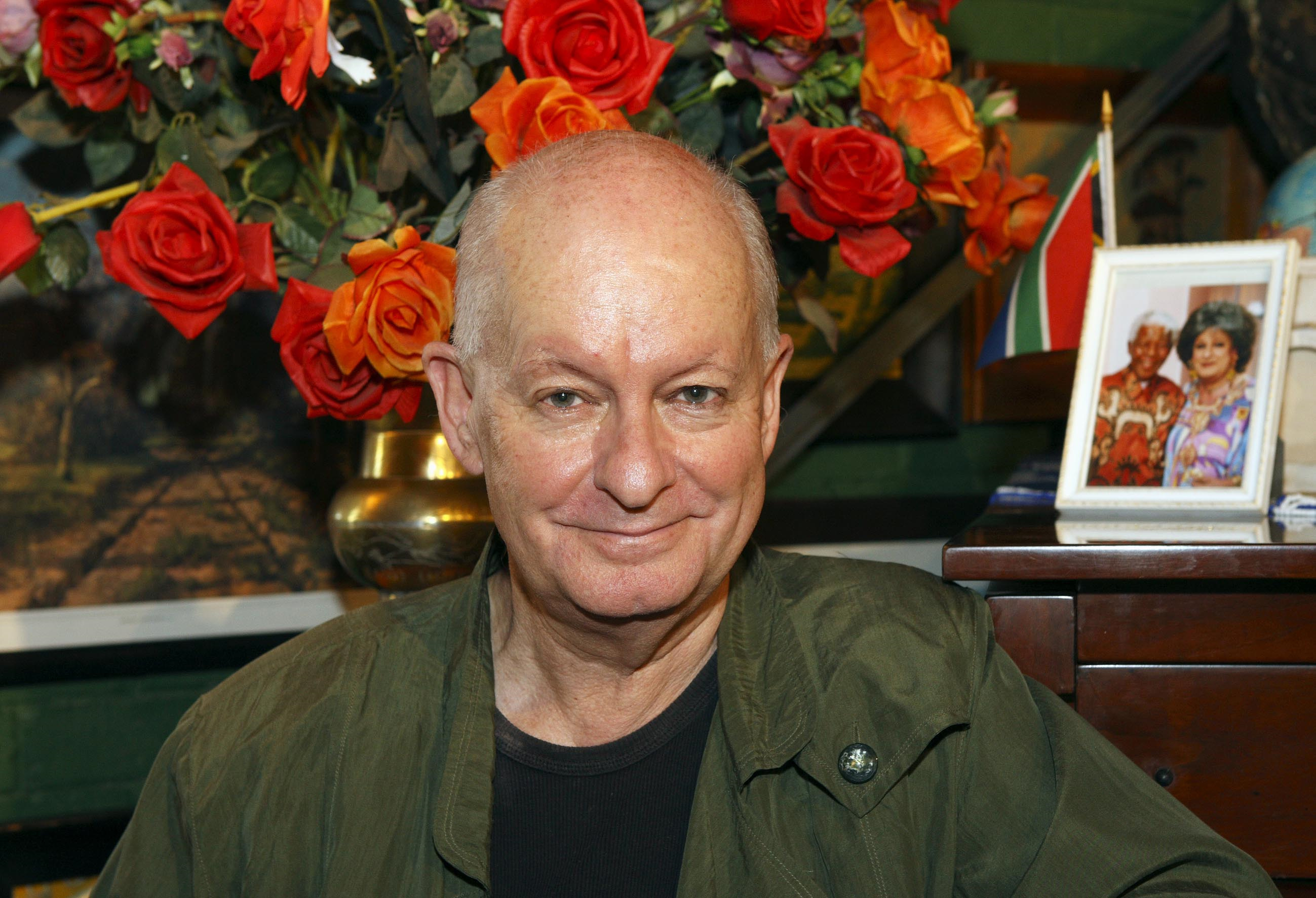
“Don’t prove anything. Go for a walk in the snow. Don’t climb things. Don’t step off the path because you might fall through a crevice. Sit down. And listen to silence you’ve never heard before.”
Pieter-Dirk Uys is talking about a recent trip he made to Antarctica – which he says he needed to see before it melted away. And such silence sounds delicious, particularly in relation to the noisy, ranty political landscape with which Uys will shortly be engaging in his stage show Elections and Erections, his latest attempt at consciousness raising (“If I irritate people enough, eventually they start thinking for themselves”). Antarctica. Just think. No Julius Malema. No Karl Niehaus. No Tokyo Sexwale mouthing off about how Cope are a bunch of witchdoctors – which is as dangerous as anything Malema has said. Just silence and Pieter-Dirk Uys. Doesn’t it sound lovely?
But Uys also knows how to make a noise, metaphorically speaking, and there’s little doubt that his alter ego Evita Bezuidenhout, who shares the role of mother of the nation with Winnie Mandela, has, in the course of her career, mouthed many more inflammatory remarks than young Julius. But the fictional former ambassador to a fictional former homeland always has that knowing looking in her eye, even when she is pretending not to. Malema, on the other hand, is devoid of the particular awareness needed for irony. And the two will no doubt be squared off against each other somewhere amid the madness and hysteria of Elections and Erections which opened in Durban on Tuesday night.
It’s one of the sadnesses of life in contemporary South Africa that the multiple voices of Pieter-Dirk Uys, like the singular voice of Desmond Tutu, remain urgently relevant. Uys has spoken many times about how he and the rest of the country’s comedians got a great big fright when apartheid ended because their core subject matter had disappeared overnight. But the absurd tragi-comedy of the National Party was very quickly replaced by that of the new ruling party. And the laughs, as it turns out, did not deviate fundamentally. What, after all, is the difference between an apartheid-built house and an RDP house? (There probably is a difference. Answers on a postcard to Pieter-Dirk Uys, Darling. And I’m not being a theatre queen. That’s his address.)
The Winnie Mandela reference above is cogent. For Uys strongly believes that it is she who should be president. The middle classes are always a little shocked by this but it’s not a laugh line. Because if you look past the intense penchant for shoes and can truly handle the concept of a female revolutionary in a dehumanising war, which for many South Africans continues as you read these words, you’ll recognise the resonance of the term “mother of the nation”. Like Jacob Zuma, Mandela has always acknowledged the poor of South Africa. Unlike Zuma, who merely courts the poor but has done little for them, she has always held their interests close to her heart. Of course, she’s a little cooked from years of fighting. But then we put up with Thabo Mbeki and his strangely slanted reality for nearly a decade. And at least Mandela’s idiosyncracies come from her closeness to the ground, not her distance from it.
While Mandela is almost certainly not spent as a major political force, she is not connected to this year’s election ballot. Evita Bezuidenhout is, however, having launched Evita’s People’s Party in 2008. Except she’s not really going the full political hog. Instead, Bezuidenhout will be using Evita’s People’s Party as a voter education mechanism. Which is great but also unfortunate. For many years, people have been calling for Evita Bezuidenhout/Pieter-Dirk Uys to run for president and I’m sure I’m not alone when I say that I’d vote for him/her in half a second, something I can’t comfortably say about a single contemporary South African politician.
“But why doesn’t she run?” I say to Uys, aware of the pleading in my voice. “Well”, he says, “the party who want to be government or opposition have to put down a R350 000 deposit. But the money’s not the issue. For me the issue is the vote. I don’t know if I want to fuck around with the seriousness of the vote. If I’m going to spend so much time telling people to be serious about the vote, am I now going to put Evita, who doesn’t exist, into a position where people will vote for her? Then there’s me. I take the buck. I registered the party”.
But he’s skirting the issue and he knows it. Why doesn’t he take it to the max and use Evita to get inside the political system? The answer is simple. “Because I don’t want to go to fucking parliament and sit there like an arsehole, listening to these third rate people with fourth rate problems. They work for me. I don’t work for them”.
And that’s one of the problem with politics. Those whose skills and compassions we could really use in our political processes tend to find the whole thing anathema, not the least because they recognise the extreme difficulty of institutional change and the hugely bureaucratic nature of such things. And in South African politics, as in so many other countries, there are many, many things that need changing. It’s a monolithic challenge that many prefer to challenge from other angles. And its fully possible that Uys, who, realistically, wouldn’t automatically be president if he were to enter the electoral system, might make more difference on-stage than in parliament.
But there remains a slim possibility that Evita will join the 2009 election ballot. Uys, says he can afford it, and that he is going to wait and see what the feeling is in the next few months. “But”, he says, “what she would say to voters is this: ‘Find the party you want as your government and the party you want as your opposition. And that vote – because it’s your vote, because you’re commited to it – will be a vote for me. You will be voting for Tannie because Tannie doesn’t need your vote because Tannie is in charge anyway’.”
William Kentridge’s primary medium is charcoal on paper. Unlike most animators, he does not use thousands of different cels but instead draws onto a piece of paper, takes a photograph or two of the image, erases the element he is animating, redraws the next frame and takes another photograph. And so on, until eventually there are thousands of photographs that constitute a film. But each erasure is imperfect and so images leave behind traces of their history.
This is one of the most primitive forms of cinema, and Kentridge is its master. It is an extremely laborious process, one that the artist himself admits is “perilously close to occupational therapy”. A week’s worth of drawings will give him 40 seconds of footage.
Sheer volume of time aside, it is a remarkably efficient and compact process compared to the extravaganza involved in making normal cinema or animation. Kentridge might use 20 pieces of paper to make an eight-minute film, as opposed to the thousands of individually drawn frames that are used for a conventional cartoon.
This erasure technique is used by Kentridge in a series of short films he made since 1989. In these films, which explore the world of mining magnate Soho Eckstein, Kentridge’s alter ego, Felix Teitlebaum, and Mrs Eckstein, the woman who connects them to each other on the artificial landscape of early 1970s Johannesburg, the technique itself becomes a reflexive element of a society that is erasing the past.
When Kentridge first started using the technique, he had no idea that it would have such metaphoric significance or endurance. In fact, he says, he viewed it more as a mistake that he could only execute an imperfect erasure. And only after he’d completed several films, did he understand that the erasure and the trace of the marks was part of the meaning of the films as well.
In Durban’s City Hall on Friday, Kentridge will be showing the nine films, with the Sontonga Quartet performing the soundtrack. Partly a tribute to the first days of cinema, when silent movies were accompanied by live scored performances, Kentridge says that viewing the films on a large scale with live musicians is “a different experience”.
“And it’s a double vision – you see the film and below the screen you see the performers making the music. A lot of people who’d heard the music before very many times suddenly said that they heard it in a very different way.”
In the catalogue for one of Kentridge’s shows, one of the writers refers to Adorno’s assertion that after Auschwitz, it would be barbaric to write poetry. Likewise, Kentridge himself talks about the impossibility for himself personally of creating utopian landscapes in the manner of the expressionists. The lyrical and the poetic are seen as too great a luxury in such a broken landscape as Johannesburg’s.
Yet, at the same time, the poetic, Arcadian images Kentridge professes not to be able to draw without descending into kitsch are about loss – and, if not about loss, he acknowledges, at least about uncomplicated desire.
Conversely, his short films, while they walk the line between hope and darkness, are also deeply lyrical and poetic in a far more 20th century manner, and contain an iridescent but deeply embedded set of desires.
But, says Kentridge, that’s really something that a viewer would see more clearly than he ever would or could. “I’m working on them frame by frame”, he says, “sequence by sequence, in the hope that they’ll add up to something coherent. If there is a smoothness or a lyricism in it, then that’s great but that’s not an aim or an objective. But I think the way they’re structured and the way that they work from the inside out may have more to do with the way one would write a poem than the way one would write a paragraph of prose.”
And the films do feel like incredibly dense literary works, despite the fact that they are very short stories.
The preface to the 9 Films, Journey to the Moon, is Kentridge’s tribute to the pioneers of film. Combining “live” animation in his studio with charcoal animations and more experimental techniques, it is a very beautiful piece of cinema that explores the artistic process itself.